

Maybe you're just starting AP Computer Science A (AP CSA), or maybe you're stuck somewhere: either way, that's completely normal. Let me say this up front: in this course you earn a strong score not by grinding through endless questions, but by studying the right things in the right order. Whether you're starting from scratch or coming in with some background, this guide gives you a step-by-step roadmap you can actually follow. Ready? Let's go.
What is AP CSA and what does it test?
AP CSA is roughly equal to an introductory college programming course; but what it really tests isn't Java itself: it's your problem solving, object-oriented thinking, and code reading. The exam has two sections: multiple-choice questions and free-response (FRQ) questions: multiple-choice is 55% of the score and free-response is 45% (these weights changed recently; they used to be 50/50). Yes, you'll use Java; but the goal isn't to memorize it, it's to learn how to build the logic. Keep that in the back of your mind and the rest gets a lot easier.
Study the units in the right order
In AP CSA, topics build on one another: so jumping ahead before you've really nailed the previous unit is exactly where students get stuck the most. Don't fall into that trap. Here's the general progression:
- Primitive types and using objects: variables and methods of built-in classes (String, Math).
- Decisions and loops: boolean expressions, if/else, while and for loops.
- Writing your own classes: constructors, instance variables, methods, encapsulation.
- Data structures: arrays, ArrayList, and 2D arrays.
- Advanced topics: inheritance, polymorphism, and recursion.
After each unit, write a small program to lock it in. Don't just read through it: this course is learned with your fingers on the keyboard.

Build solid Java fundamentals
Here's what I see most in lessons: the student actually understands the concept, but gets stuck because the syntax and basic Java habits haven't settled in yet. Variable types, the difference between value and reference, writing loops, calling methods… practice these until you can do them without thinking. Once that base is solid, the advanced topics really do click much faster: I promise.
Multiple-choice (MCQ) strategy
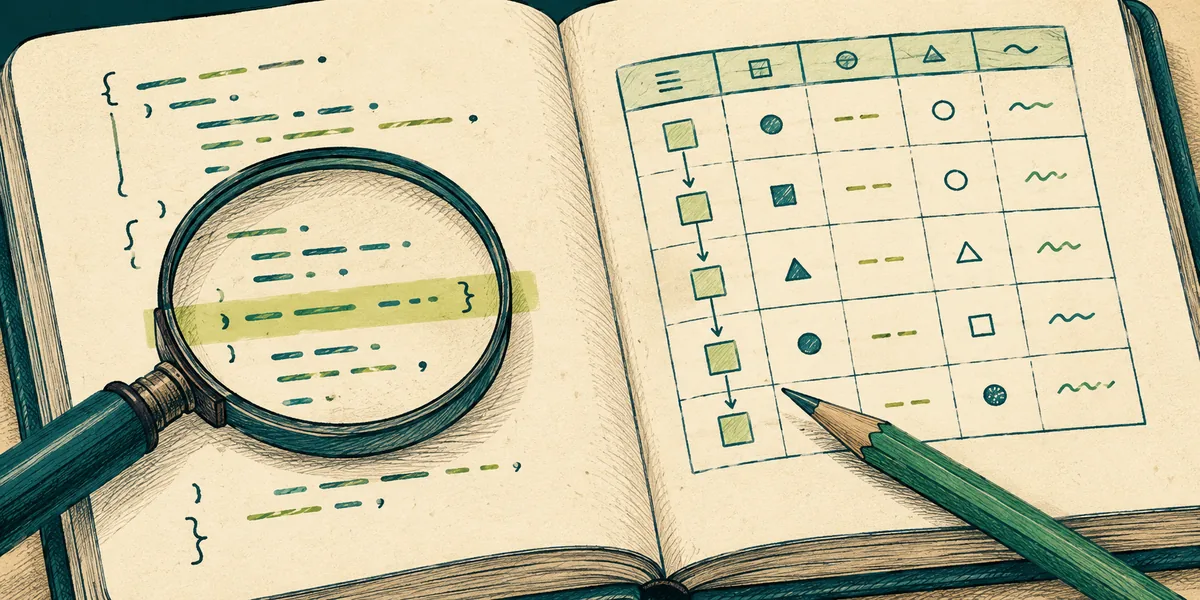
The secret to this section is one word: tracing. That means following the code line by line on paper, writing down the value of each variable: not doing it in your head. Build these three habits and you'll feel the difference on the MCQ:
- Trace with written-down values, not from memory.
- Always check the edge cases (empty arrays, boundary indices, loop limits).
- Learn to eliminate wrong options: in most questions, two choices are deliberate traps.
Free-response (FRQ) strategy
Let's be clear about one thing: on the FRQ, points come from building the right structure far more than from perfectly working code. As you read, first restate what's being asked in your own words, then lock down the method signature and return type. Partial credit exists, so don't leave a blank where you're stuck: write down as much of the logic as you can. Practice the four common types heavily: methods and control structures, class writing, array/ArrayList operations, and 2D arrays. The day you're comfortable with all four, the fear of the FRQ is gone.
A plan based on time left
However much time you have, your plan should match it:
- 3+ months: Finish the units in order and write code in each. Solve at least one FRQ a week.
- 1-2 months: Lean into your weak units and solve past FRQs under timed conditions.
- Final 2-3 weeks: Take full practice exams, keep an error log, and close your recurring mistakes one by one.
Common mistakes
And finally, a few warnings to save you from losing points you didn't need to:
- Only watching videos without writing code: AP CSA is learned by doing.
- Solving FRQs without a timer; time pressure is a real factor on exam day.
- Moving past mistakes without logging them; a mistake you don't write down will show up again on the exam.
- Skipping edge cases: these quietly cost the most points.