
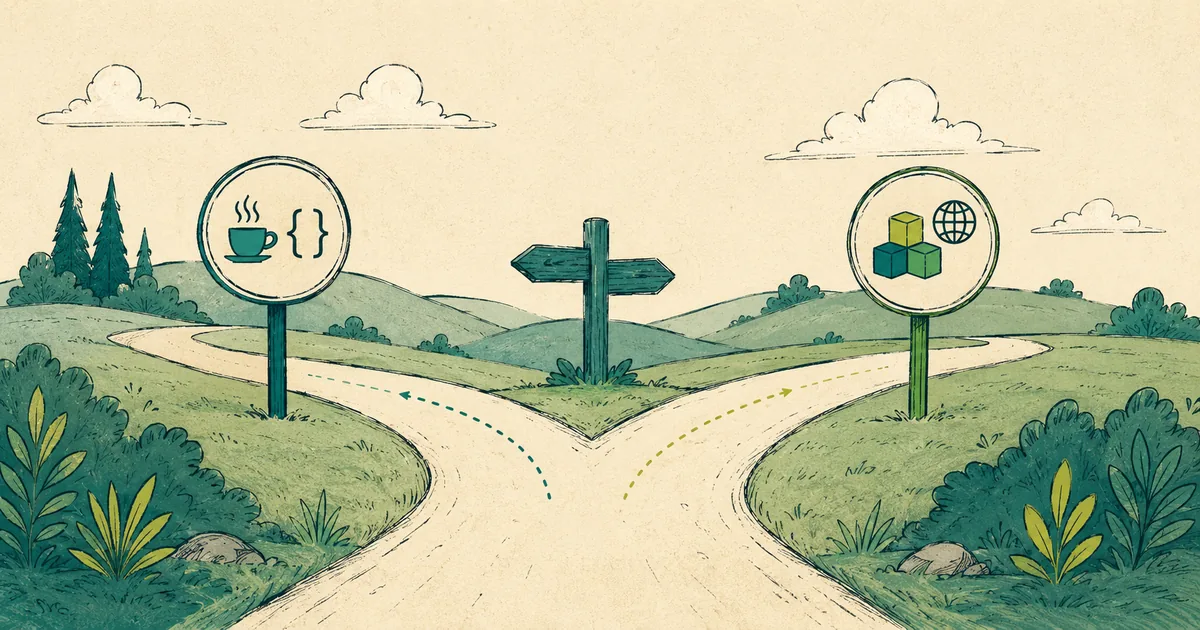
The two courses have similar names but different goals. AP Computer Science A (AP CSA) is a Java-based, programming-heavy course, while AP Computer Science Principles (AP CSP) covers the broad principles of computer science and isn't tied to a single language. The right choice depends on the student's goal and current level.
| Your question | AP CSA | AP CSP |
|---|---|---|
| What will I learn? | Programming and problem solving in Java. | Computing concepts, data, the internet, and programming. |
| Which language? | Java. | No single required language. |
| How am I assessed? | Multiple-choice and Java free-response questions. | Multiple-choice, a Create task, and exam-day written responses. |
| Who does it suit? | Students who want deeper coding practice. | Students who want a broad introduction to computing. |
What's the core difference?
AP CSP focuses more on "what computer science is and how it affects the world": data, the internet, algorithmic logic, security, and the impacts of computing. AP CSA teaches programming and object-oriented thinking directly, through Java. In short: CSP offers breadth, CSA offers depth.
Language and content
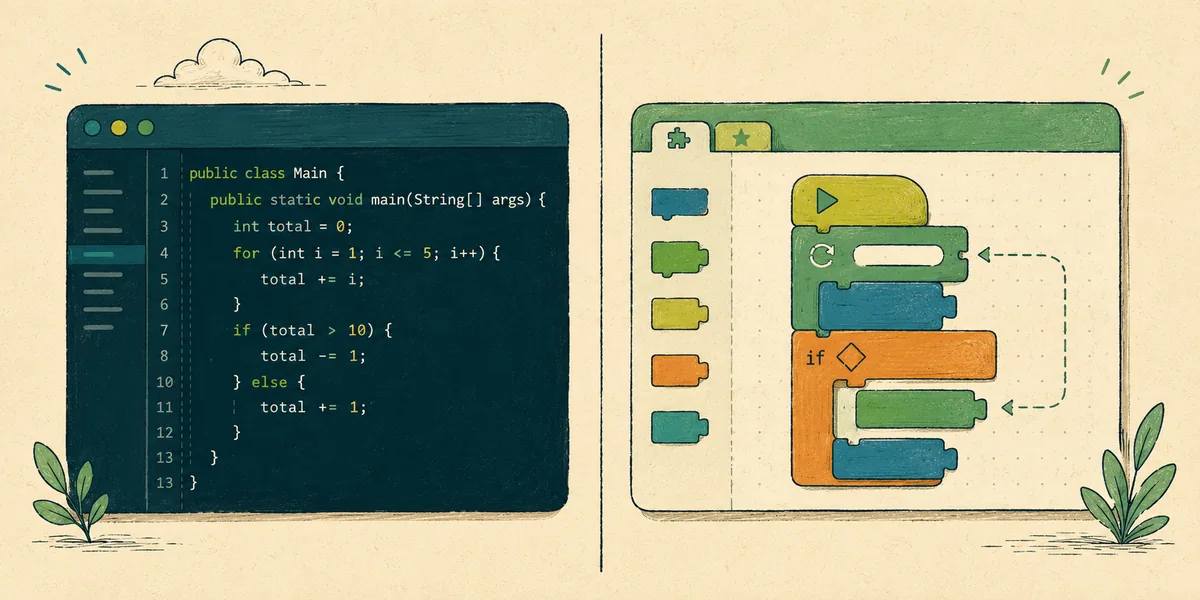
- AP CSP: Not tied to a specific language; block-based or text-based tools and conceptual pseudocode are used. The content is more conceptual.
- AP CSA: Uses Java throughout. It focuses on real code with classes, methods, arrays, and ArrayList. Designing and implementing inheritance relationships is outside the current AP CSA course and exam scope.
Exam format
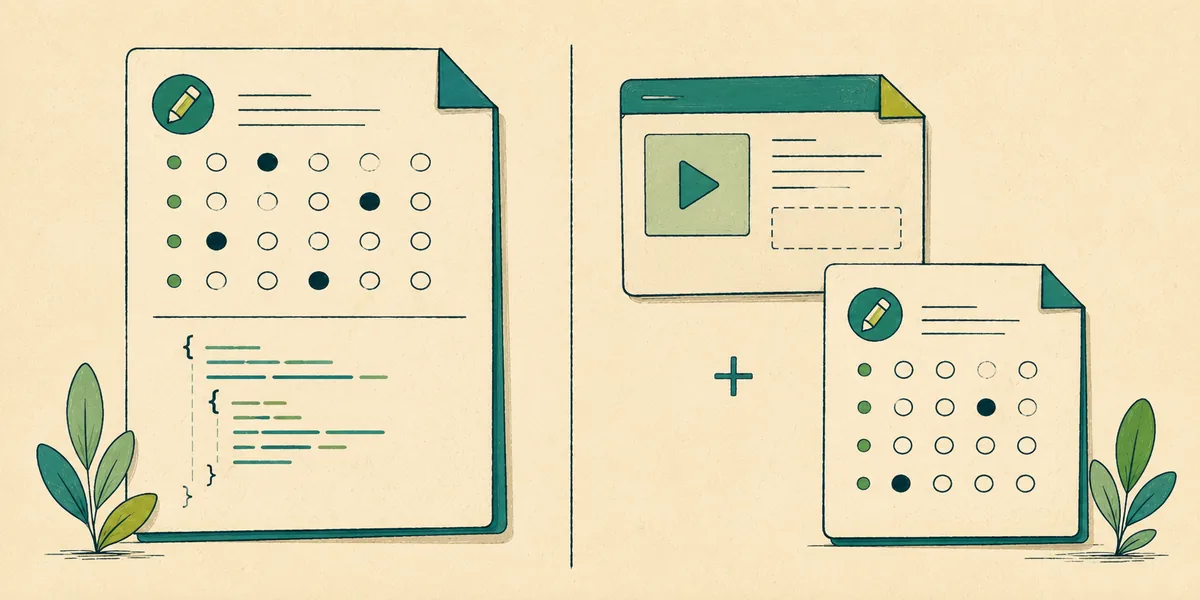
- AP CSP: The Create Performance Task is completed during the course. The end-of-course exam includes multiple-choice questions and written responses about the student’s program. Multiple-choice accounts for 70%; the Create task and written-response section accounts for 30%.
- AP CSA: A single exam with multiple-choice and free-response (FRQ) sections, where you write real Java code in the FRQ.
Difficulty and who each suits
Generally, AP CSP is considered more introductory and accessible: a good start for students with no programming experience. AP CSA demands more programming practice and suits students leaning toward engineering or computer science.
- AP CSP may suit you if: you're new to coding, or want to see the topics in a broad framework.
- AP CSA may suit you if: you want to go deeper in programming and are considering CS/engineering in college.
Which first? Both together?
There's no required order and no prior computer science course is required. College Board recommends algebra preparation for both courses; AP CSA also recommends English and familiarity with functions. Schools may set their own enrollment requirements. A common approach is for a student new to programming to take CSP first to see the core concepts, then CSA to go deeper in programming. A student who can already code may start directly with CSA. Taking both together is possible for strong students with the time, but the workload increases.
The safest move is a short level check before deciding, so it's clear which course best serves the student's goal.
The third option: AP Cybersecurity
The comparison is usually made between two courses, but there is now a third: AP Cybersecurity. It is a brand new AP course, launched in fall 2026, with its first exam on 5 May 2027. It has no prerequisite and is designed to match an introductory college-level cybersecurity course.
The most practical way to hold the three in mind is as three lenses:
- AP CSP gives you breadth — the wider picture of computing, with programming as one part of it.
- AP CSA gives you programming depth — you write methods and classes in Java and explain what the code does step by step.
- AP Cybersecurity gives you a defense and risk lens — choosing the right control and making evidence-based decisions.
Choose by your goal, not the course name
When you decide which AP computing course to take, don't look at the course name. Look at the question you are trying to answer:
- Interested in information systems in general — AP CSP.
- Want programming and design — AP CSA.
- Want to work on security against cyber attacks — AP Cybersecurity.
You can take one or several; there is no required order. Choose by your goal, your current level, and the study time you can give it.
The three exams side by side
- AP CSA: two sections, 90 minutes each — 42 multiple-choice questions (55%) and 4 free-response questions (45%). The 2027 exam is on 12 May, fully digital. Details: AP CSA exam format.
- AP CSP: the Create task and exam-day written responses together account for 30%. You submit the required project materials before the exam, then answer questions about your program on exam day. Multiple-choice accounts for the remaining 70%. Details: AP CSP Create Performance Task.
- AP Cybersecurity: first exam 5 May 2027, fully digital — 60 multiple-choice questions (70%) and 1 free-response question (30%). Details: AP Cybersecurity topics.
Frequently asked questions
Should I take AP CSA or AP CSP?
AP CSP looks at the wider picture of computing, with programming as one part of it. AP CSA is a deeper programming course — you write methods and classes in Java. Which fits depends on what you want to learn and your current preparation.
Is there a required order between AP CSP and AP CSA?
No required sequence or prior computer science course is needed. College Board recommends algebra preparation for both courses; AP CSA also recommends English and familiarity with functions. Check your school for local enrollment requirements.
Where does AP Cybersecurity fit?
It is a third lens: defense and risk. It is a brand new course with its first exam on 5 May 2027.
Does it make sense to take both together?
It is possible for strong students with the time, but the workload increases. A short level check before deciding is the safest move.
Which one is harder?
Difficulty comes from your preparation, not the course name. AP CSA requires correct Java syntax on the exam; AP CSP combines a Create task with exam-day written responses in a section worth 30% of the score. They are different kinds of load.
Current requirements: AP CSA course framework, AP CSA recommended preparation, AP CSP recommended preparation, and AP CSP exam requirements.