
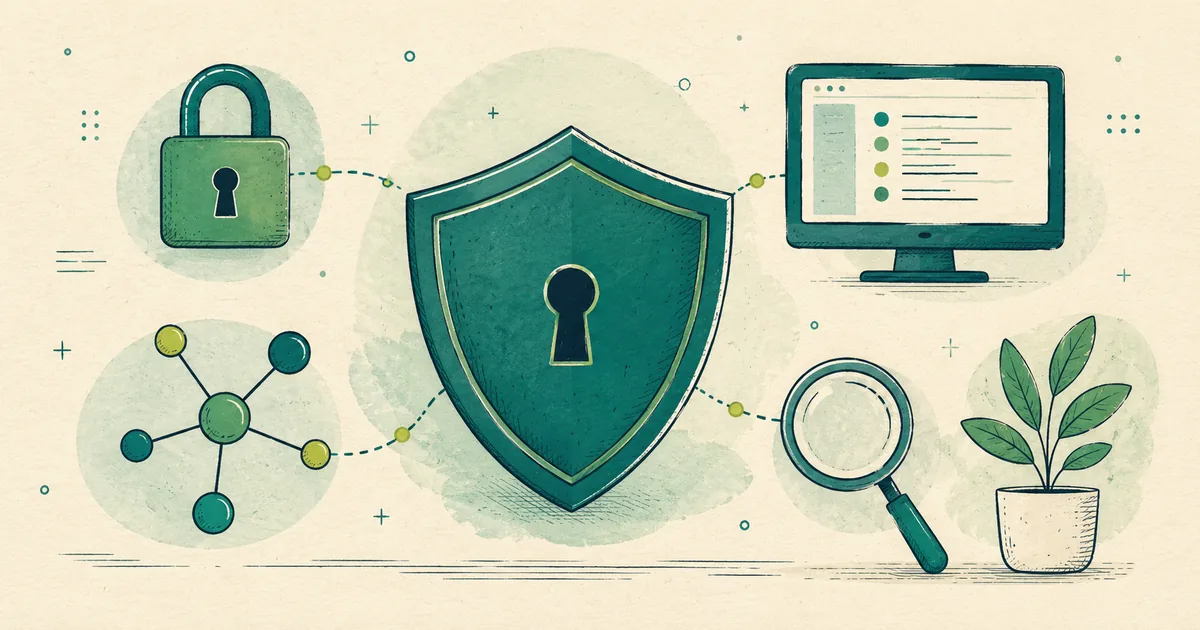
AP Cybersecurity is one of College Board's new AP courses, offered for the first time in Fall 2026, with its first exam on 5 May 2027, fully digital. It has no prerequisite and is designed to be equivalent to a one-semester introductory college cybersecurity course. This guide summarizes the five units in the official framework, their topics, and the four skill categories.
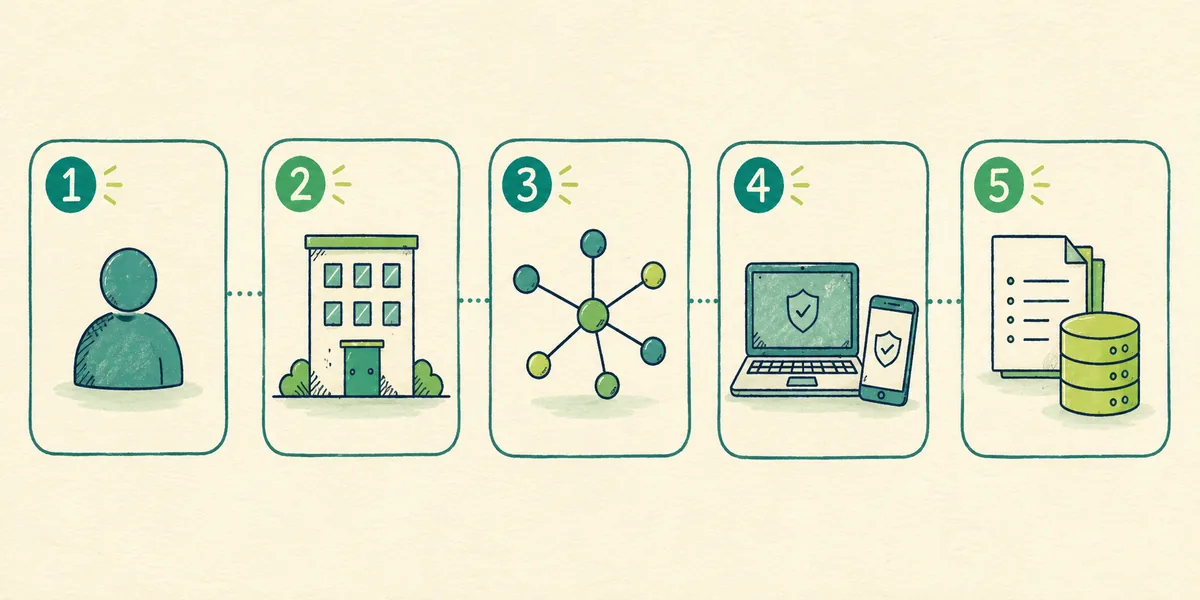
- Unit 1: Introduction to Security
- Unit 2: Securing Spaces
- Unit 3: Securing Networks
- Unit 4: Securing Devices
- Unit 5: Securing Applications and Data
- The four skill categories
- Exam format, date and score weights
- The free-response task: one device, one decision
- A common myth: it is not just ethical hacking
- Who is it for?
- University credit
- Frequently asked questions
Unit 1: Introduction to Security
The introductory unit focuses on the human side of security and core threats.
- Recognizing social engineering tactics and explaining their impact.
- Weak authentication and suspicious website logins; making authentication stronger.
- Security on public networks (public Wi-Fi) and types of wireless attacks.
- AI-based attacks and the use of AI in cyber defense.
Unit 2: Securing Spaces
Treats physical security as the first layer of defense (defense-in-depth).
- Cyber foundations: types of threats, phases of a cyberattack, the risk assessment process.
- Risk management strategies and types of security controls; why defense-in-depth is needed.
- Physical vulnerabilities and attacks; assessing and documenting risk.
- Protecting physical spaces and detecting physical attacks.
Unit 3: Securing Networks
Built on network attacks, segmentation, firewalls, and log analysis.
- Common network attacks and how network vulnerabilities are exploited.
- Managerial controls and wireless network security settings.
- Network segmentation and how it increases security.
- Firewall types, allowing/denying traffic with an access control list, effective placement.
- Automated security tools and detecting attacks by analyzing log files.
Unit 4: Securing Devices
Device security; authentication and detecting attacks on devices.
- Device vulnerabilities and attacks on devices.
- Authentication methods.
- Protecting devices and detecting attacks on them.
Unit 5: Securing Applications and Data
Application and data security; access controls and cryptography.
- Application and data vulnerabilities and attacks.
- Managerial controls and access controls.
- Protecting stored data with cryptography; symmetric and asymmetric cryptography.
- Protecting applications and detecting attacks on data and applications.
The four skill categories
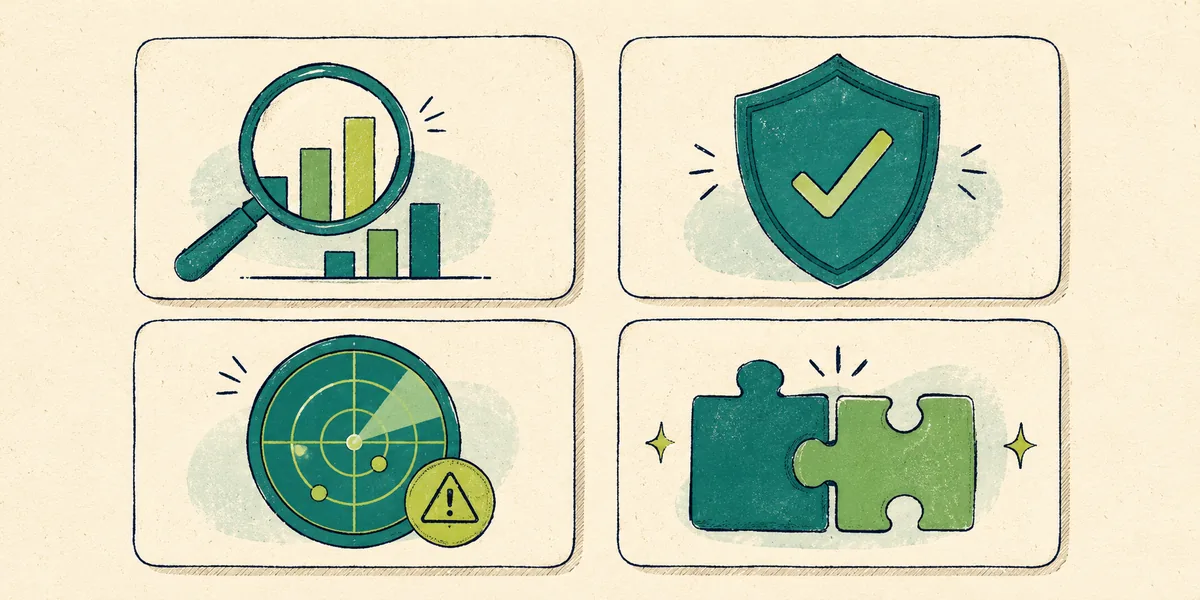
All units are learned around four core Cybersecurity Skills:
- Analyze Risk: evaluate risk to organizational assets.
- Mitigate Risk: implement protective and deterrent security controls.
- Detect Attacks: implement detection methods, monitor systems, and analyze evidence.
- Collaborate: work with others and with AI to accomplish a task.
The exam is built around three of these: analyze risk (judge what could go wrong and how much it matters), mitigate risk (choose the right control and defense layer) and detect attacks (read logs and evidence to spot intrusions). Each of these carries roughly 25-40% of the exam.
Exam format, date and score weights
The first AP Cybersecurity exam is on 5 May 2027 and it is fully digital, delivered in Bluebook.
- 60 multiple-choice questions — 80 minutes — 70% of the score
- 1 free-response question — 50 minutes — 30% of the score
Questions assess skills like risk analysis, control selection, log/incident interpretation, and evidence-based justification. Scores are reported on the 1-5 scale.
The free-response task: one device, one decision
The free-response task is a device security analysis. You work with one simulated device, using:
- its security policy,
- firewall rules,
- system and application logs,
- file permissions.
Your job is simple to say and hard to do: find the attack, cite the evidence, and recommend a safer configuration. Those three steps are the three exam skills meeting in a single task.
A common myth: it is not just ethical hacking
One common myth is that this course is just ethical hacking. It isn't. The real focus is defense: choosing the right controls and making evidence-based decisions. The course practice also includes collaboration and AI-supported work, not just individual attacks — which is exactly what the fourth skill category, Collaborate, is about.
Who is it for?
It is a strong fit for security-minded pathways:
- cybersecurity,
- information security and assurance,
- computer science,
- IT and network engineering,
- digital forensics,
- secure software engineering.
It is also relevant to risk, audit, and technology governance. The course has no prerequisite and is designed to match an introductory college-level cybersecurity course, so whether or not you studied security before, you can start here.
University credit
AP Cybersecurity has not held its first exam yet. College Board says the first institutional credit policies are expected in Spring 2027. So today, no university guarantees credit for it.
Always check the official policy for your score, campus, major, and entry year — that is the only binding source on credit.
Frequently asked questions
When is the AP Cybersecurity exam?
The first AP Cybersecurity exam is on 5 May 2027, and it is fully digital, delivered in Bluebook.
What is the AP Cybersecurity exam format?
The exam has two sections: 60 multiple-choice questions (80 minutes, 70% of the score) and 1 free-response question (50 minutes, 30% of the score). Scores are reported on the 1-5 scale.
What are the AP Cybersecurity units?
The course is organized into five units: Introduction to Security, Securing Spaces, Securing Networks, Securing Devices, and Securing Applications and Data. You can see the path: from the foundations of security to protecting applications and data.
Is AP Cybersecurity hard?
There is no prerequisite, and the course is designed to match an introductory college-level cybersecurity course, so you do not need prior security study. The difficulty sits in what the free-response task asks for: find the attack, cite the evidence, and recommend a safer configuration.
Is AP Cybersecurity just ethical hacking?
No. The real focus is defense: choosing the right controls and making evidence-based decisions. The course practice also includes collaboration and AI-supported work.
Does any university give credit for AP Cybersecurity?
Not yet. The course has not held its first exam, and College Board expects the first institutional credit policies in Spring 2027. Check the official policy for your score, campus, major and entry year.
AP CSP, AP CSA or AP Cybersecurity — which should I take?
Think of three lenses. AP CSP gives you breadth, AP CSA gives you programming depth, and AP Cybersecurity gives you a defense and risk lens. Choose by your goal, your current level, and your study time — not by the course name.