
Agentic AI is an approach where an AI model doesn't just generate text, but plans and takes step-by-step actions on its own to reach a given goal. This guide explains, in plain language, what Agentic AI is, how it differs from generative AI, and how an AI agent works.
What is Agentic AI?
With a classic language model, you ask a question and it produces an answer. With Agentic AI, you give the model a goal ("analyze this data and produce a report"); the model breaks the goal into subtasks, uses tools when needed (search, running code, calling an API), evaluates intermediate results, and takes steps on its own until the goal is reached. You move from a system that "answers" to one that "gets things done."
How it differs from generative AI
- Generative AI: Produces a single output (text, image, code) in one shot and stops there.
- Agentic AI: Works in multiple steps toward a goal: it plans, uses tools, checks the result, and retries if needed. In short, generative AI "writes," agentic AI "does."
How does an AI agent work?
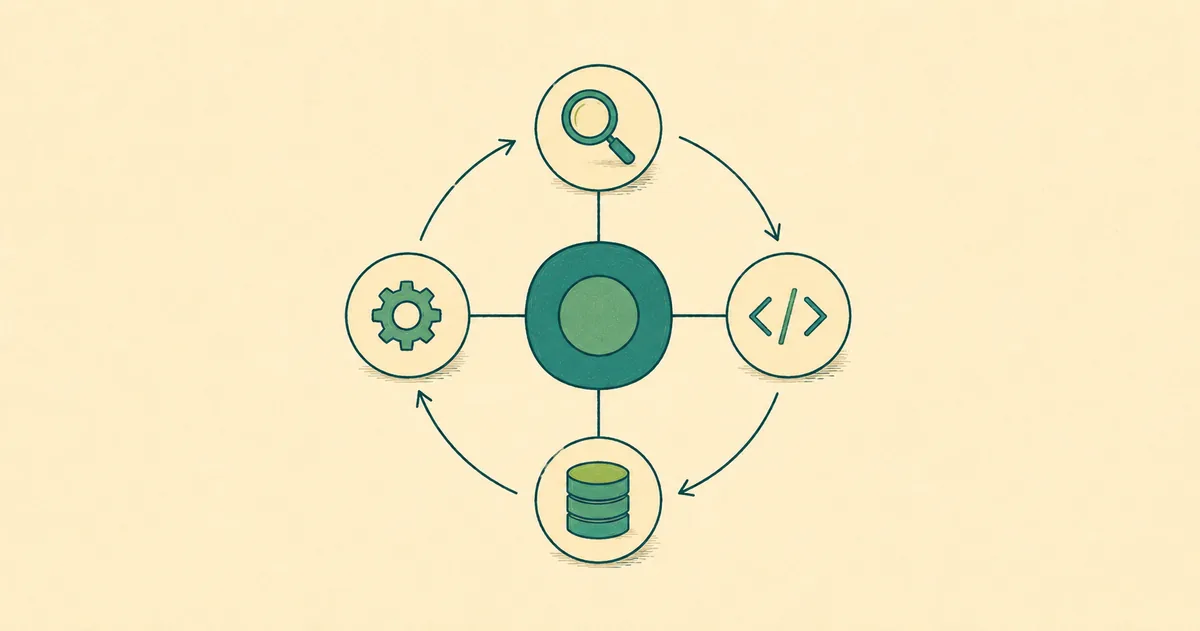
Most AI agents run on a simple loop:
- Perceive: Read the goal and the current state (input, intermediate results).
- Reason / plan: Decide what the next step should be.
- Act: Call a tool (run a search, execute code, fetch data).
- Observe: Evaluate the tool's result and loop back.
This loop repeats until the goal is complete or a stop condition is met.
Core components
- Model (the brain): The language model that makes decisions.
- Tools: The capabilities the agent uses to interact with the outside world: search, running code, API calls, reading files.
- Memory: Remembering previous steps and context; short-term and long-term memory.
- Planning / orchestration: The layer that splits the task into subtasks and manages the flow.
Single-agent and multi-agent systems
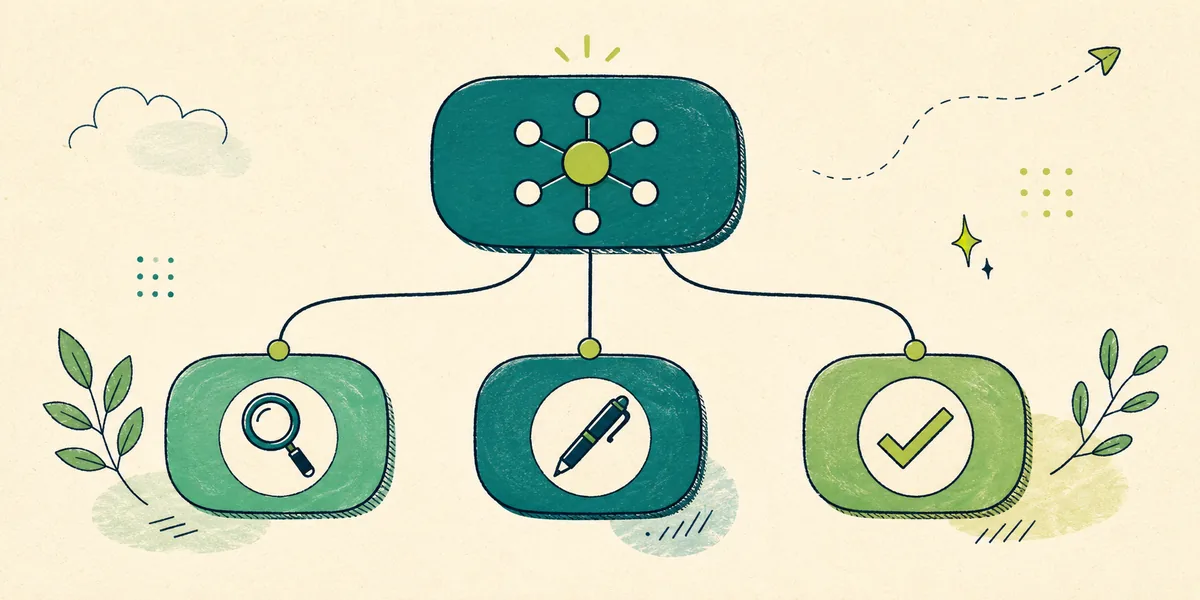
A single agent is enough for simple tasks. For complex work, multi-agent systems are used: each agent takes on a specialty (one researches, one writes, one reviews) and an "orchestrator" coordinates them. Division of labor can produce more reliable results than a single agent doing everything.
Use cases
- Software development (writing code, debugging, testing).
- Research and summarization (scanning sources, producing reports).
- Workflow automation (filling forms, moving data, reporting).
- Customer support and operations assistants.
Risks and security
As an agent gains autonomy, new risks appear: an agent with too much authority, being steered by malicious input (prompt injection), or taking uncontrolled actions. That's why permission limits, human-in-the-loop approval steps, and traceability are critical in agentic systems. Communities like OWASP have begun framing the security risks and mitigations specific to agentic AI.
How to get started
A solid path looks like this: first learn the basics of language models and prompting, then understand tool use (giving a model external capabilities), then build a simple agent, and finally move to multi-agent design and security topics. Basic programming (Python) makes this path easier.